Doctors Finally Have an Answer for Why Restless Legs Get Worse at Night — and It Has Nothing to Do With Your Nervous System
Millions of Americans spend their nights in a private hell of uncontrollable leg sensations — crawling, tingling, burning, the unstoppable urge to move. A discovery from Japan may explain why, and why everything doctors have tried so far has missed the actual cause.
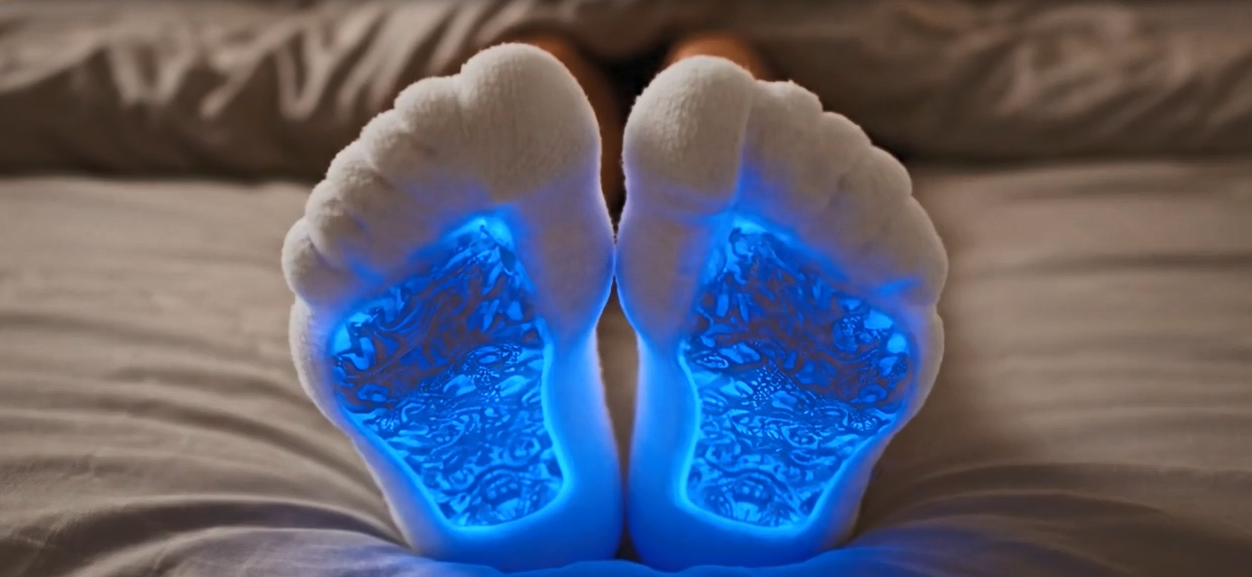
You know the feeling. You get into bed after a long day, finally ready to sleep — and then it starts. The creeping. The crawling. The burning tingle that runs from your calves all the way to your feet. The unbearable, unstoppable urge to move your legs. You kick. You stretch. You get up and walk the hallway at 2am. You lie back down. It starts again.
If you have Restless Leg Syndrome — or suspect you do — you are one of an estimated 25 to 30 million Americans living through this same nightmare every night. And if you've been through the standard medical circuit — dopamine agonists, iron supplements, stretching routines, compression socks — you already know what most patients eventually discover: the treatments manage the symptoms for a while, and then stop working. Or they work at a cost. The side effects of RLS medications include nausea, dizziness, impulse control disorders, and — in one of medicine's more bitter ironies — a phenomenon called augmentation, where the medication itself makes the RLS progressively worse over time.
So the question that haunts every RLS patient eventually becomes: what is actually causing this? Not the proximate mechanism — dopamine pathways, iron deficiency in the brain — but the root cause that medicine keeps failing to address. A physician who traveled to Japan to answer that exact question recently recorded a short free presentation explaining what he found. Watch it below before reading further.
This short free presentation covers what researchers discovered when they compared American RLS rates with Japanese populations — and why the difference points to something most Western medicine has never seriously investigated. It takes under 10 minutes.
Watch the short presentation below — it may be the first explanation you've heard that actually accounts for why your legs behave this way at night.

Tap to watch: Dr. Frank Benninger explains the toxin-nerve connection behind RLS — and what a Japanese overnight method has shown in helping thousands finally sleep through the night. Approx. 8 minutes · No signup required
What restless legs syndrome actually is — and what it isn't
The medical establishment currently classifies RLS as a neurological disorder — specifically, a dysfunction in the dopaminergic pathways that regulate movement signals in the legs. This is accurate as a description of the mechanism, but it doesn't explain why those pathways are disrupting in the first place. It's the equivalent of saying a car won't start because the engine isn't firing — technically true, but unhelpfully silent on what caused the engine to fail.
What the research increasingly points to — and what most patients are never told — is that environmental toxins accumulate in peripheral nerve tissue over time, progressively disrupting the electrical signaling that governs sensation and involuntary movement in the limbs. Heavy metals, pesticide residues, endocrine disruptors, and industrial chemicals all have documented neurotoxic effects. And they concentrate, notably, in the extremities — the hands and feet — where blood flow is slowest and clearance is most impaired.
In Japan — where RLS rates are dramatically lower than in the United States despite comparable stress levels and diet quality — researchers traced part of the difference to a practice that has been observed for over a thousand years: the application of specific herbal compounds to the soles of the feet during sleep, traditionally believed to draw toxins out of the body through the skin's natural osmotic processes.
Why the feet? Why at night?The timing and location of RLS symptoms — always worse at night, always in the legs — are not coincidental. They reflect the body's circulatory patterns during rest. When you lie down, blood pools in the lower extremities. Lymphatic drainage slows. The clearance of metabolic waste and accumulated compounds from peripheral tissue — which is partially maintained by movement and gravity during the day — drops significantly at night.
This is why RLS worsens at night: the very conditions that are supposed to allow recovery instead allow toxin accumulation in nerve tissue to reach its peak concentration. The sensations you feel — the crawling, the tingling, the burning — are what disrupted nerve signaling actually feels like in real time.
The feet, specifically, are where this accumulation is most pronounced — and most addressable. The plantar surface of the foot has one of the highest concentrations of sweat pores in the body, and traditional Japanese medicine has long used this anatomical fact as a pathway for extracting what it calls dosha — accumulated metabolic debris — from the body overnight.

"When I went to Japan and saw how few people there suffer from the leg restlessness that plagues Americans every night, I stopped looking at their genetics or their diet. I started looking at what they do differently while they sleep. What I found — a 1,500-year-old tradition that modern labs have now validated — changed everything I thought I knew about why our legs won't let us rest."
According to Dr. Benninger and other researchers in this emerging field, there are specific patterns that distinguish toxin-driven RLS from other forms — patterns that most conventional assessments never look for:
- Symptoms are dramatically worse at night than during the day
- The sensations begin in the feet and travel upward through the calves
- You've lived in or near areas with agricultural pesticide use, industrial activity, or older housing stock
- Your symptoms worsened after a period of high stress, illness, or dietary change
- Standard RLS medications worked initially but lost effectiveness over time
- You also experience persistent fatigue, joint stiffness, or brain fog — all consistent with systemic toxin load
- Your symptoms improve temporarily after exercise — consistent with improved peripheral circulation and clearance
The important caveat, as Dr. Benninger notes, is that this doesn't mean everyone with RLS has a toxin-accumulation problem — or that toxin accumulation is the only factor. But for the significant subset of patients for whom standard treatments have failed, the toxin connection is the piece that was never investigated. And in his experience, it's often the one that finally provides the answer they've been looking for.
The full explanation — including what specifically was found in Japanese households, how the overnight extraction process works, and what the results have looked like for thousands of Americans who've tried this approach — is in the free presentation at the top of this page. If you've been through the standard RLS circuit and still aren't sleeping, this may be the most important 10 minutes you spend on the subject.